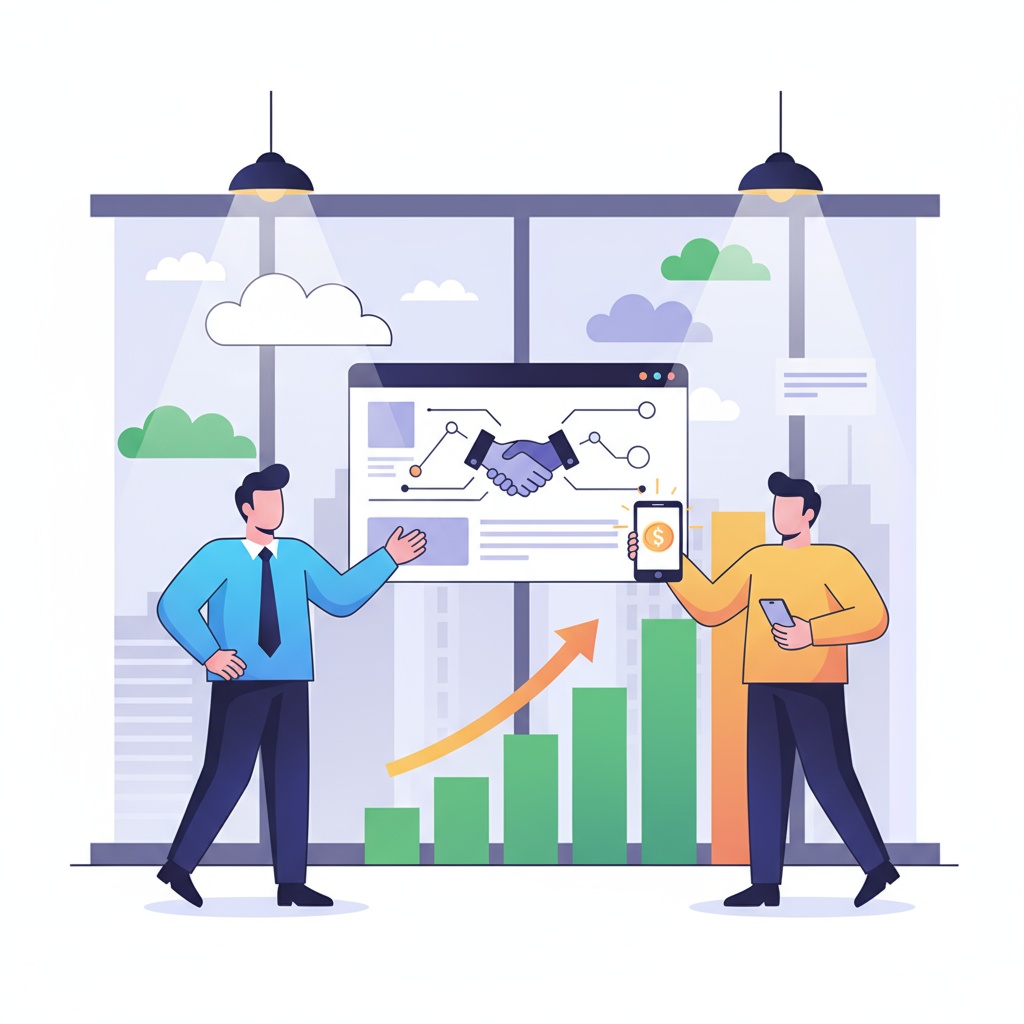
New Trends in Digital Payments: BNPL, Digital Wallets
Reading time: 12 minutes
Ever watched someone fumble with cash at checkout while the entire line behind them sighs in collective impatience? Those days are rapidly becoming ancient history. The digital payment revolution isn’t just changing how we pay—it’s fundamentally reshaping our relationship with money itself.
Here’s the reality: Digital payments have exploded from niche convenience to everyday necessity. In 2023, global digital payment transactions reached a staggering $9.46 trillion, with projections hitting $14.78 trillion by 2027. But the real story isn’t just in the numbers—it’s in how Buy Now, Pay Later (BNPL) services and digital wallets are democratizing financial access and transforming consumer behavior.
Table of Contents
- Understanding the Digital Payment Landscape
- The BNPL Revolution: Breaking Down Barriers
- Digital Wallets: Your Financial Command Center
- Comparative Analysis: Traditional vs. Modern Payment Methods
- Implementation Guide for Businesses
- Navigating Challenges and Risk Management
- Frequently Asked Questions
- Your Payment Innovation Roadmap
Understanding the Digital Payment Landscape
Let’s cut through the noise: Digital payments aren’t a single technology but an ecosystem of interconnected solutions solving different financial pain points. Think of it like transportation—you wouldn’t use a bicycle for the same journey as an airplane, and similarly, different payment methods serve distinct purposes.
The Market Dynamics Driving Change
Three fundamental forces are propelling this transformation. First, smartphone penetration reached 85% in developed markets by 2024, creating an always-connected consumer base expecting instant, frictionless transactions. Second, the pandemic accelerated digital adoption by an estimated five years, with 73% of consumers now preferring contactless payment methods. Third, younger demographics (Gen Z and Millennials) representing $350 billion in combined purchasing power demand flexible, transparent payment options.
Quick Scenario: Meet Sarah, a 28-year-old marketing professional. She uses Apple Pay for daily coffee runs, Klarna for furniture purchases, and Venmo for splitting dinner bills. Her wallet? It contains two cards—emergency backups she rarely touches. Sarah represents the new normal, and businesses unprepared for her payment preferences are watching customers abandon carts at checkout.
Key Players Reshaping the Industry
The competitive landscape features traditional financial institutions battling nimble fintech disruptors. PayPal processes over 22 million transactions daily. Apple Pay claims 507 million users globally. Affirm, Afterpay, and Klarna collectively facilitated over $120 billion in BNPL transactions in 2023. Meanwhile, emerging players like Cash App and emerging super-apps are blurring lines between payments, banking, and commerce.
Expert Insight: “The companies winning in digital payments aren’t just processing transactions—they’re creating comprehensive financial experiences. The wallet of tomorrow isn’t about storing payment methods; it’s about storing value, identity, and financial agency,” notes Jennifer Schulz, fintech analyst at Forrester Research.
The BNPL Revolution: Breaking Down Barriers
Well, here’s the straight talk: Buy Now, Pay Later isn’t new credit—it’s reimagined credit for the digital age. Unlike traditional credit cards with revolving balances and compound interest, BNPL offers transparent installment plans with zero or minimal interest for on-time payments.
How BNPL Actually Works
The mechanism is elegantly simple. At checkout, consumers select a BNPL option and instantly receive approval for purchases typically ranging from $50 to $30,000 depending on the provider and consumer creditworthiness. The total amount is divided into equal installments (usually 4 payments over 6-8 weeks for short-term plans, or monthly payments spanning 6-36 months for larger purchases). The merchant receives full payment immediately, minus a 2-8% transaction fee paid to the BNPL provider.
Real-World Example: Consider furniture retailer Wayfair, which integrated Affirm as a BNPL option in 2019. Within 18 months, they reported a 20% increase in average order value and 15% higher conversion rates among customers who used BNPL. The psychological shift? Customers could visualize paying “$87/month” rather than confronting a daunting “$2,099” total.
The Consumer Psychology Behind BNPL Adoption
Three psychological factors drive BNPL’s explosive growth. First, present bias—humans naturally prioritize immediate gratification over future consequences. Second, mental accounting—spreading costs across installments feels more manageable than lump-sum payments. Third, credit avoidance—particularly among younger consumers carrying student debt, BNPL offers access without the stigma and complexity of credit cards.
The statistics validate this behavior: 56% of BNPL users specifically avoid credit cards, 67% appreciate transparent fee structures without hidden charges, and 43% claim BNPL helps them manage budgets more effectively.
BNPL Market Growth by Region (2024)
Percentage represents year-over-year transaction volume growth
Regulatory Considerations and Consumer Protection
The BNPL boom hasn’t escaped regulatory scrutiny. In the UK, the Financial Conduct Authority announced plans to regulate BNPL providers similar to traditional credit products. Australia implemented affordability assessments requiring providers to verify consumers can repay loans. The U.S. Consumer Financial Protection Bureau launched investigations into leading BNPL firms regarding data harvesting practices and credit reporting standards.
Pro Tip: If you’re considering BNPL as a consumer, treat it like any financial commitment. Calculate whether installment schedules align with your income cycles, understand late payment penalties (typically $7-10 per missed payment), and avoid overextending across multiple BNPL accounts—39% of users admit losing track of payment obligations.
Digital Wallets: Your Financial Command Center
Digital wallets have evolved far beyond simple payment apps. Today’s wallets are comprehensive financial platforms integrating payments, loyalty programs, identity verification, cryptocurrency holdings, and even health records. They’re becoming the digital equivalent of your physical wallet—only smarter, more secure, and infinitely more capable.
Types of Digital Wallets Explained
Understanding the distinctions matters for both users and businesses. Closed wallets like Starbucks or Amazon only work within specific ecosystems, offering seamless brand integration but limited flexibility. Semi-closed wallets like Google Pay and Apple Pay work across multiple merchants but within defined networks. Open wallets like PayPal allow peer-to-peer transfers, merchant payments, and bank withdrawals—maximum flexibility with broader complexity.
Geographically, preferences vary dramatically. WeChat Pay dominates China with over 900 million active users, integrating payments into a super-app encompassing messaging, shopping, and services. India’s UPI-based digital wallets like Paytm and PhonePe process 10 billion transactions monthly. Europe sees fragmentation with regional players complementing global platforms.
Security Architecture: Why Digital Beats Physical
Contrary to skeptics’ concerns, digital wallets offer superior security to physical cards. They employ tokenization—replacing your actual card number with unique, transaction-specific codes. Even if intercepted, these tokens are useless for subsequent purchases. Biometric authentication (fingerprint, facial recognition) adds layers impossible with plastic cards. Furthermore, remote wipe capabilities protect you if your phone is lost or stolen.
The numbers speak volumes: Card-present fraud occurs at rates of 0.17% for traditional cards versus 0.02% for digital wallet transactions. Digital wallets also eliminate physical card skimming, a $1.9 billion annual problem in the U.S. alone.
Business Integration and Merchant Benefits
For merchants, digital wallet acceptance isn’t optional anymore—it’s existential. Businesses accepting digital wallets report 30% faster checkout times, reducing queue anxiety and cart abandonment. Transaction data provides rich customer insights for personalization. Loyalty program integration happens seamlessly within payment flows.
Case Study: Target’s integration of its proprietary wallet with inventory systems allows customers to check product availability, apply discounts, and complete purchases within a single app interface. The result? Their digital wallet users spend 20% more annually than traditional payment customers, with 50% higher visit frequency.
| Feature | Traditional Cards | Digital Wallets | BNPL Services |
|---|---|---|---|
| Transaction Speed | 15-30 seconds | 3-5 seconds | 10-20 seconds |
| Consumer Fees | 0% (interest varies) | 0% | 0-30% APR |
| Merchant Cost | 1.5-3.5% | 1.5-3.0% | 2-8% |
| Fraud Rate | 0.17% | 0.02% | 0.09% |
| Consumer Adoption | 83% (mature market) | 67% (rapid growth) | 45% (explosive growth) |
Implementation Guide for Businesses
Ready to modernize your payment infrastructure? Strategic implementation separates market leaders from laggards. Let’s break down the essential steps that turn payment options into competitive advantages.
Phase 1: Assessment and Strategy
Start with data-driven customer analysis. Which payment methods do your customers already use? Survey data reveals preferences, but transaction attempts provide harder evidence—track how often customers reach checkout but don’t complete purchases, potentially indicating payment friction.
Evaluate your average transaction values. BNPL makes most sense for purchases exceeding $100, while digital wallets optimize all transaction sizes. Consider your customer demographics: Gen Z over-indexes on BNPL (63% usage), Millennials on digital wallets (71%), while Gen X and Boomers show more balanced adoption.
Phase 2: Technology Integration
Most modern payment processors offer unified APIs simplifying integration. Stripe, Square, and Adyen provide single integration points accessing multiple payment methods. For e-commerce platforms like Shopify, WooCommerce, or Magento, pre-built plugins enable implementation in hours rather than months.
Technical Considerations:
- PCI Compliance: Digital wallets reduce your compliance burden through tokenization, but documentation requirements remain
- Mobile Optimization: 72% of digital wallet transactions occur on mobile devices—ensure seamless mobile checkout flows
- Testing Protocols: Simulate various scenarios including network failures, partial payments, and refund processes before launch
- Analytics Integration: Configure tracking to measure adoption rates, transaction success rates, and revenue attribution by payment method
Phase 3: Launch and Optimization
Soft launches with select customer segments minimize risk while generating valuable feedback. Monitor key metrics: transaction completion rates should improve 10-15% with digital wallet options, average order values typically increase 15-25% with BNPL integration.
Customer education accelerates adoption. Display payment options prominently on product pages, not just at checkout. Visual trust indicators—security badges, user testimonials about payment flexibility—reduce hesitation. Consider offering small incentives (5% discount, free shipping) for trying new payment methods during initial rollout.
Common Pitfall: Many businesses treat new payment methods as checkout-only additions. Top performers integrate payment messaging throughout the customer journey—product pages showing “or 4 interest-free payments of $24.99,” abandoned cart emails highlighting flexible payment options, and even marketing campaigns focused on payment flexibility.
Navigating Challenges and Risk Management
Innovation brings opportunity—and complexity. Understanding potential pitfalls allows proactive mitigation rather than reactive crisis management.
Challenge 1: Fraud and Chargeback Management
Digital payments face sophisticated fraud schemes. Account takeover attacks, where criminals access legitimate accounts, increased 250% in 2023. BNPL services face unique risks—”friendly fraud” where customers claim non-receipt of goods after installment payments begin.
Mitigation Strategies:
- Implement multi-factor authentication for high-value transactions
- Deploy machine learning fraud detection analyzing purchasing patterns, device fingerprints, and behavioral biometrics
- Establish clear return and refund policies integrated with payment provider terms
- Monitor chargeback ratios—exceeding 1% triggers penalties from payment networks
Challenge 2: Consumer Debt Accumulation
BNPL’s accessibility creates potential for overextension. Studies show 43% of BNPL users have missed at least one payment, 30% report difficulty tracking multiple BNPL commitments, and younger users particularly struggle with financial planning around installment obligations.
Responsible providers are implementing affordability checks, credit bureau reporting to prevent over-leveraging, and financial education resources. As a business, clear communication about total costs and payment schedules protects both customers and your brand reputation.
Challenge 3: Integration Complexity and Technical Debt
Legacy systems struggle integrating modern payment methods. Synchronizing inventory, accounting, and customer data across traditional and emerging payment channels requires robust middleware. Incomplete integration creates operational nightmares—manual reconciliation, inventory discrepancies, customer service escalations.
Practical Solution: Adopt a payment orchestration platform. These solutions sit between your systems and multiple payment providers, normalizing data formats, handling failovers, and providing unified reporting. The upfront investment pays dividends in operational efficiency and flexibility to adopt future payment innovations.
Frequently Asked Questions
Are digital wallets actually safer than carrying physical cards?
Yes, significantly safer. Digital wallets use tokenization, replacing your actual card number with transaction-specific codes that are useless if intercepted. They require biometric authentication (fingerprint/face recognition) that can’t be stolen like a PIN. If your phone is lost, you can remotely wipe payment data—impossible with lost physical wallets. Fraud rates are 8x lower for digital wallet transactions compared to physical cards. The combination of encryption, tokenization, and biometric security creates multiple protection layers absent in physical cards.
Does using BNPL affect my credit score?
It depends on the provider and your payment behavior. Most BNPL providers don’t perform hard credit checks during approval, so initial usage won’t impact scores. However, practices vary: Affirm reports to credit bureaus, potentially helping build credit with on-time payments or damaging it with missed payments. Klarna and Afterpay historically didn’t report regularly but are moving toward reporting. Late payments typically trigger fees ($7-10) and may eventually be reported to collections agencies if severely delinquent, definitely harming credit. The key: treat BNPL like any financial obligation with scheduled payments you must honor.
What happens if I return a purchase made through BNPL?
Refund processes vary by provider but follow general patterns. When you initiate a return, contact the BNPL provider to pause payments—continuing payments during return processing creates refund timing complications. Once the merchant confirms the return, the BNPL provider typically refunds any payments you’ve already made, often within 5-10 business days. If you’ve paid interest or fees, some providers refund these, others don’t. The original purchase is canceled, and any remaining installments are eliminated. Always save return confirmation and BNPL communication as documentation if disputes arise.
Your Payment Innovation Roadmap
The digital payment revolution isn’t slowing—it’s accelerating. By 2026, analysts predict digital payments will account for 75% of all global transactions, with BNPL services growing to $680 billion in annual transaction volume. The businesses thriving in this landscape aren’t just accepting new payment methods—they’re strategically integrating payments into comprehensive customer experiences.
Your Immediate Action Steps:
- Audit Your Current State (This Week): Map your existing payment methods, analyze completion rates by payment type, identify where customers abandon purchases, and survey customers about desired payment options
- Prioritize Implementation (Next 30 Days): Choose 1-2 high-impact payment methods based on customer data and transaction profiles. For most businesses, this means adding at least one major digital wallet (Apple Pay/Google Pay) and evaluating BNPL if average orders exceed $100
- Execute Strategically (Next 90 Days): Integrate selected payment options through your processor’s API or platform plugins, conduct thorough testing across devices and scenarios, train customer service teams on new payment method specifics, and prepare educational content for customers
- Measure and Optimize (Ongoing): Track adoption rates, conversion improvements, average order value changes, customer feedback, and fraud rates. Iterate based on data—payment optimization is continuous, not one-time
- Stay Ahead (Next 12 Months): Monitor emerging trends like cryptocurrency payments, embedded finance solutions, and AI-powered payment personalization. Early adopters of tomorrow’s innovations gain disproportionate competitive advantages
The convergence of BNPL and digital wallets with emerging technologies—blockchain, artificial intelligence, Internet of Things—promises even more dramatic transformations. Imagine smart refrigerators automatically reordering groceries with optimized payment methods, or AI assistants negotiating payment terms on your behalf. These aren’t distant futures—they’re developments happening now.
Here’s your central truth: Payment methods aren’t just transaction mechanics—they’re fundamental to customer experience, brand perception, and competitive positioning. Businesses treating payments as afterthoughts lose customers to competitors who’ve made payments effortless, flexible, and aligned with modern expectations.
What payment friction is currently costing your business customers—and how will you eliminate it? The tools exist, the customer demand is proven, and the competitive imperative is clear. Your move determines whether you lead the digital payment revolution or scramble to catch up.